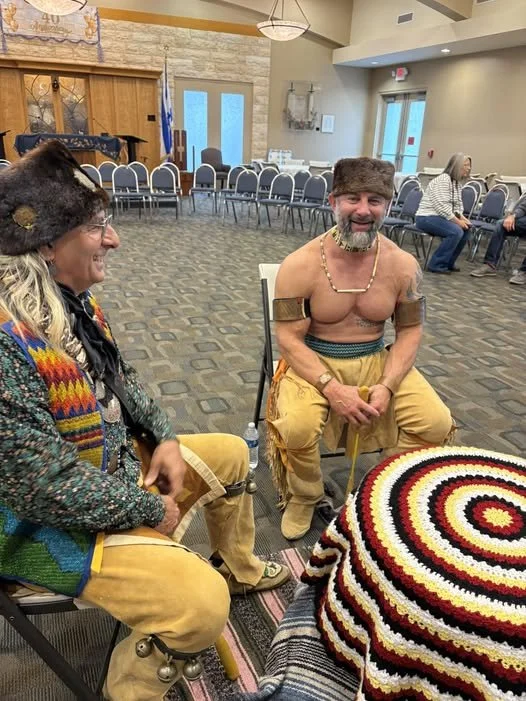
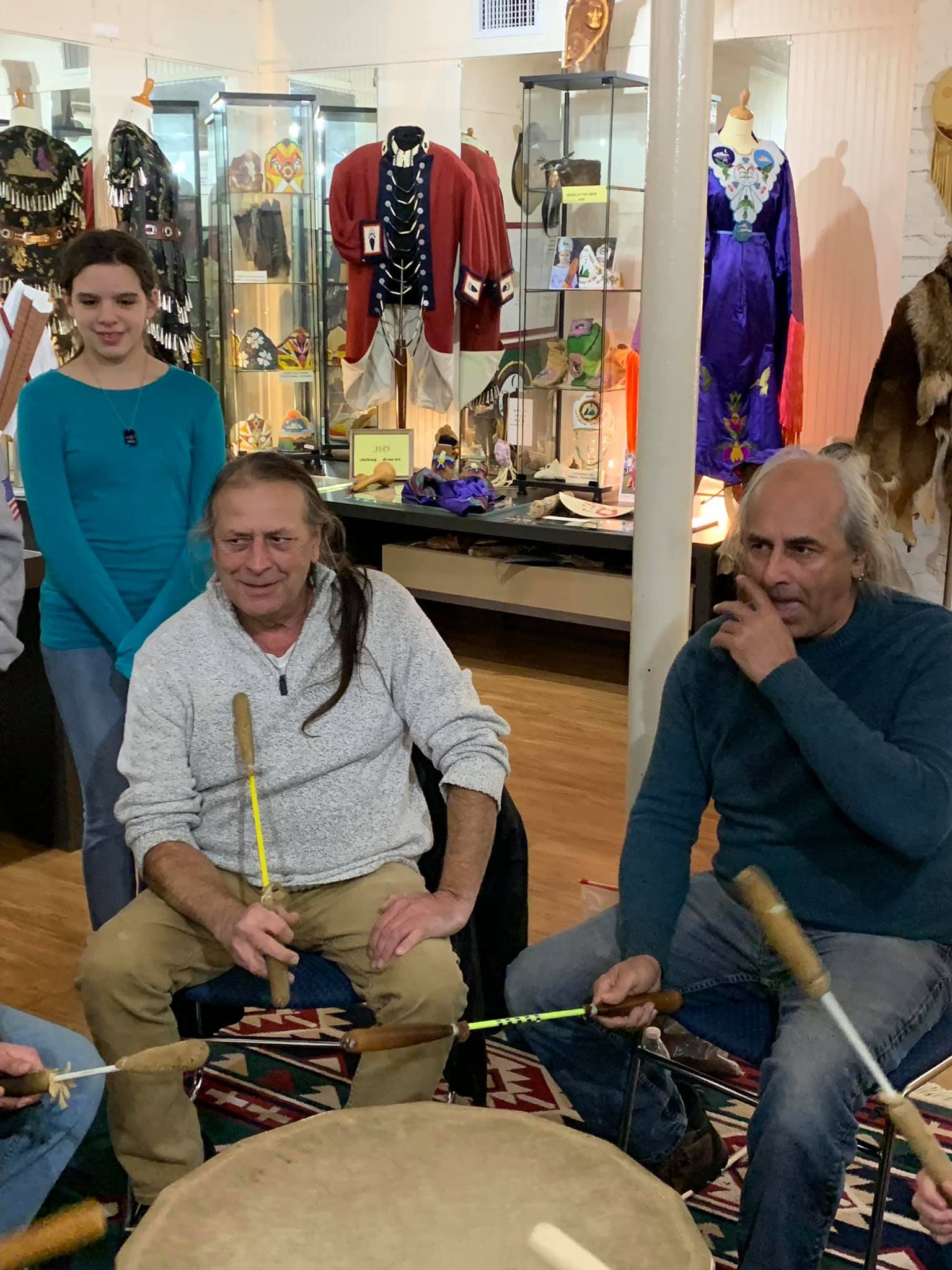
Within Cherokee traditions, music, song, and movement are understood as gifts entrusted to the people by the Creator — expressions meant to guide relationship, memory, and balance. They are not performances, nor entertainment, but living practices that help individuals and communities remain connected to Spirit, to the land, and to one another.
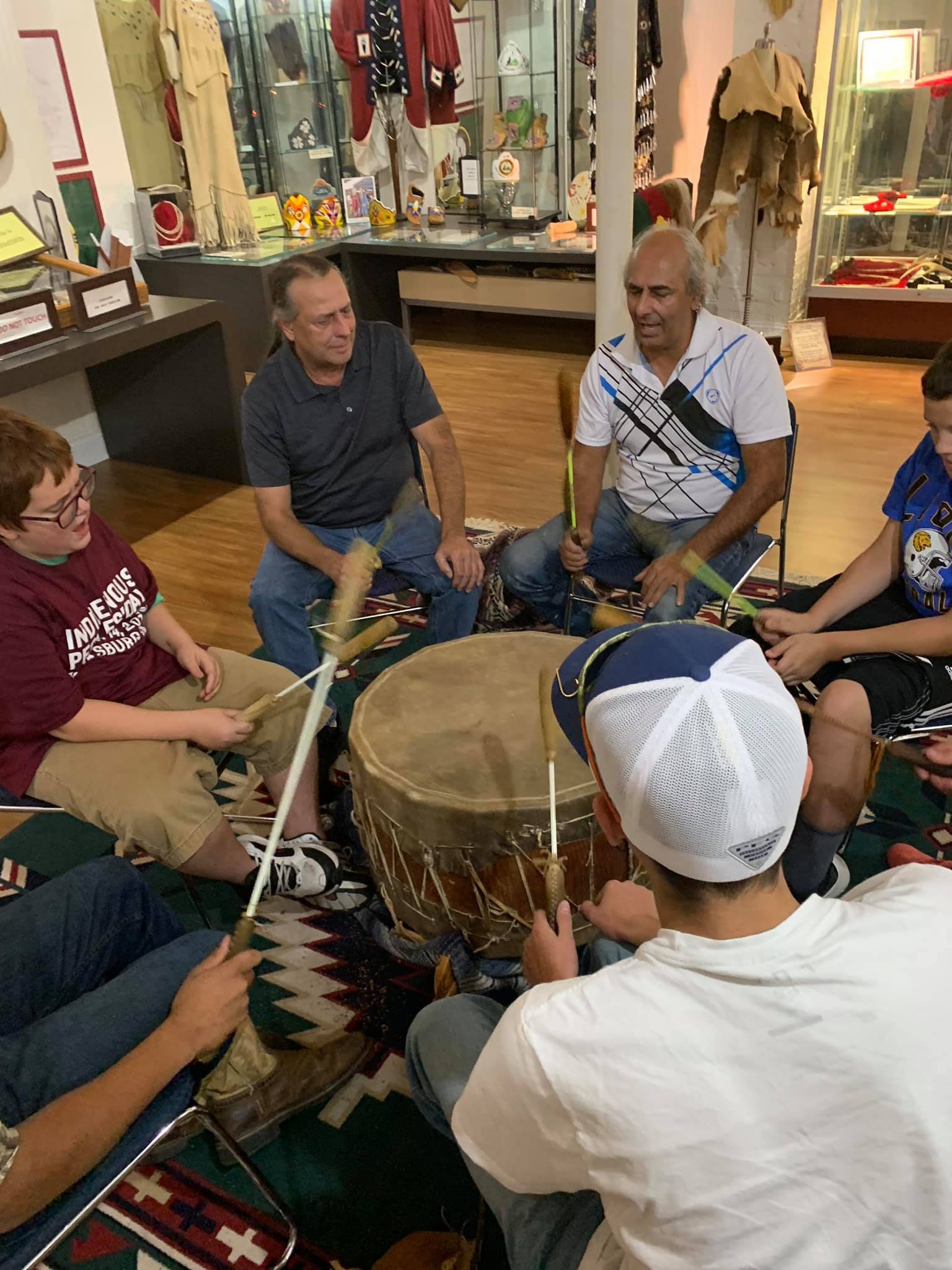
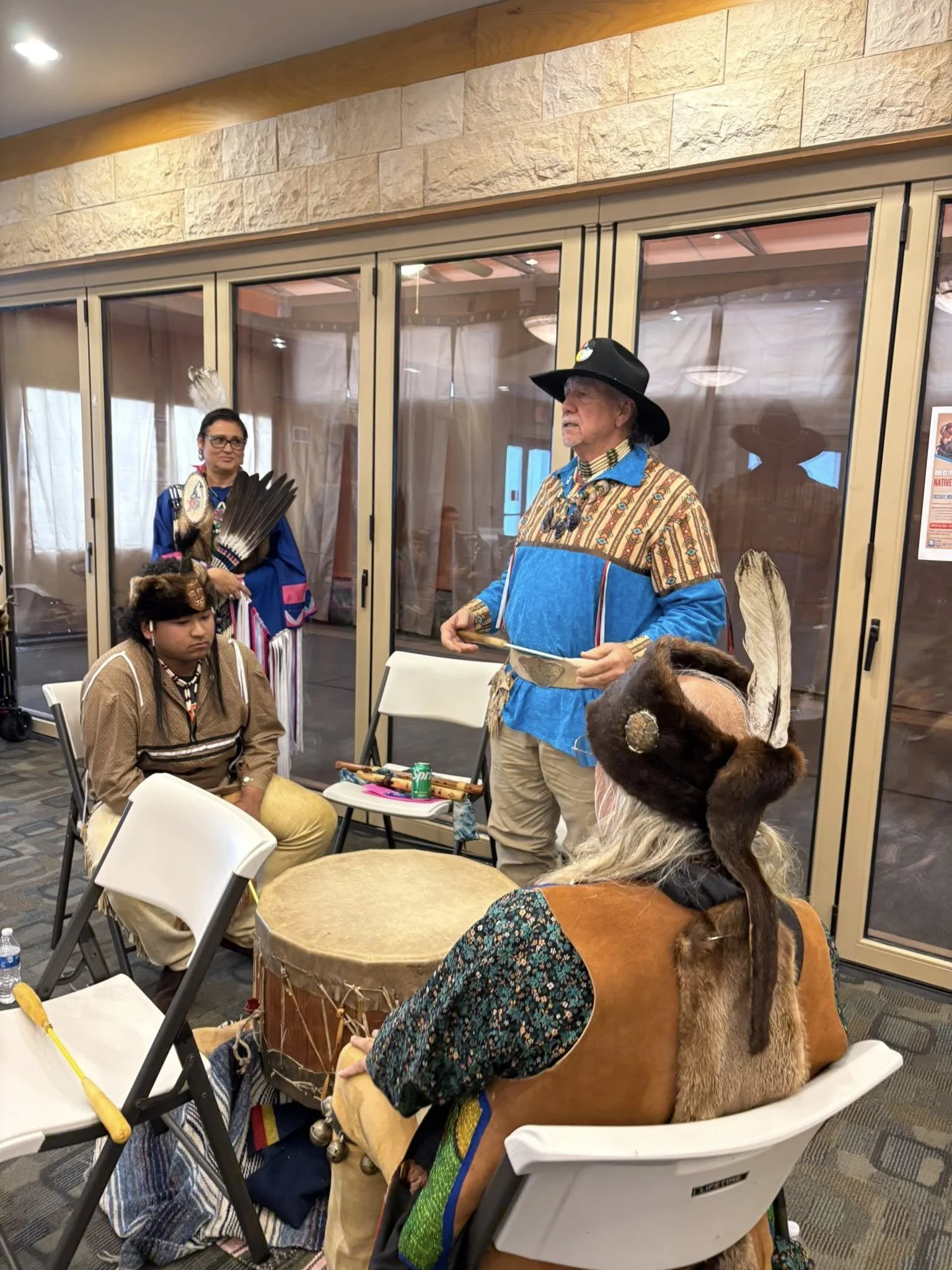
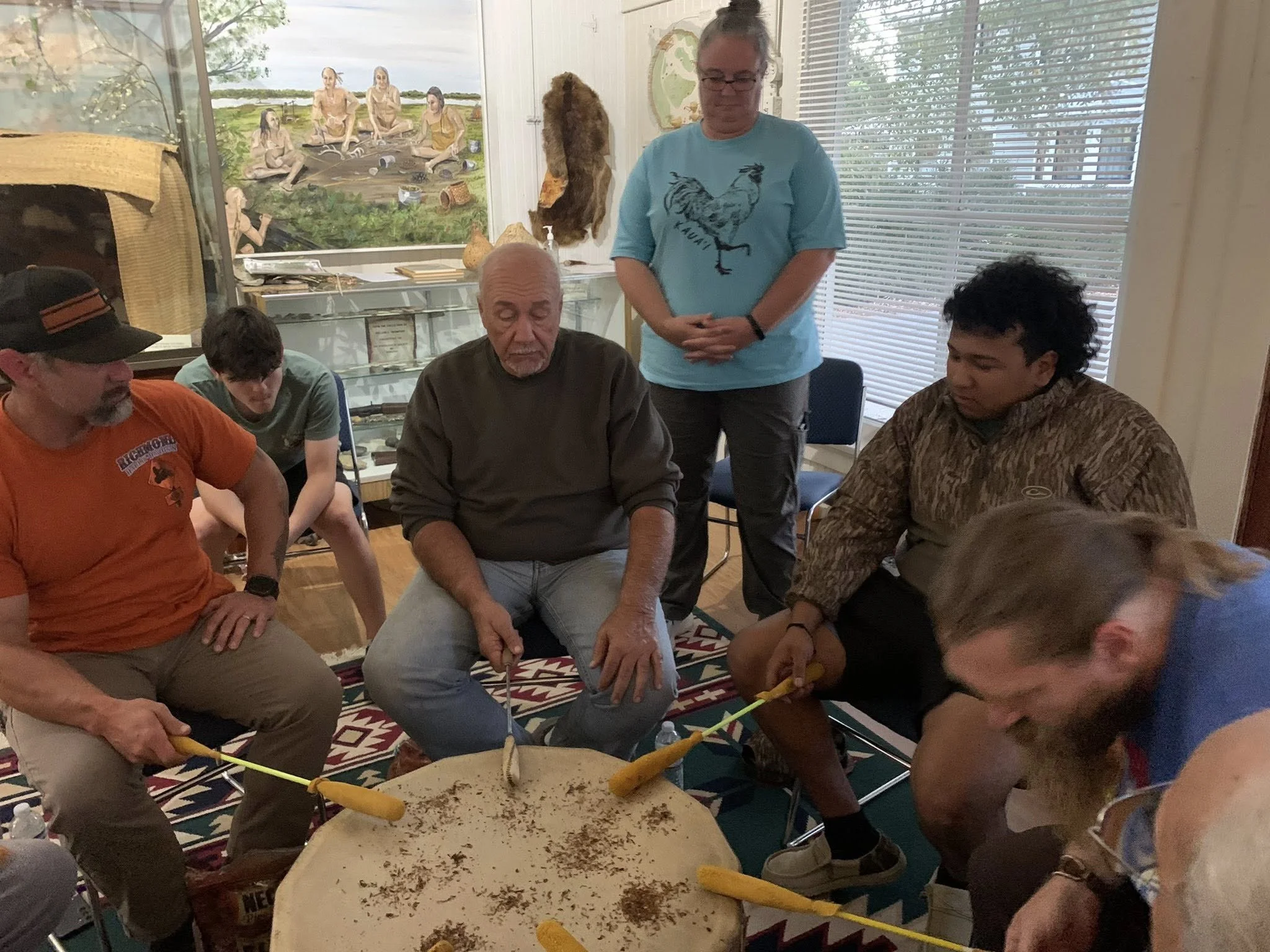
The drum is honored as an elder — often spoken of as Grandfather, whose voice helps call people together. Its deep rhythm creates a space for prayer, intention, storytelling, and collective remembrance. When the drum is sounded, it is done with respect, tobacco may be offered, and a prayer is spoken before anyone begins. Only those invited or seated at the drum may touch it, and when its work is finished, Grandfather is carefully covered and protected.
Song and dance arise from this same reverence. Each song carries a story — of origin, survival, love, loss, gratitude, and the responsibilities that come with being a Cherokee person. These songs are not written down; they remain in memory and are carried forward through breath, voice, movement, and presence. Dance becomes the visible part of that story, grounding each step in family, land, and community. Regalia, likewise, holds meaning — reflecting personal, clan, and cultural lineage.
The flute holds a different but deeply intimate place. Its voice has long been associated with reflection, courtship, and emotional expression. Its notes carry love, sorrow, longing, and connection, often played alone — a way for a person to speak without words, to seek clarity, or to call out to someone they cherish. In some settings, the flute becomes a spiritual instrument, used to offer prayer or to open the heart toward healing.
These practices are preserved within the Wolf Creek Cherokee Museum & Tribal Center, not as relics of the past, but as living teachings still shared with the public today. Drum practice is open for respectful observation at the Tribal Museum, allowing visitors to learn, listen, and witness tradition in a good way. Through the Tribe’s programming and services, groups may also request drum presentations, cultural song, and education demonstrations, offered in accordance with Tribal protocol.
Through Grandfather’s voice, the stories of song, the movement of dance, and the quiet breath of the flute — the Cherokee continue to remember who they are, and continue to teach with reverence, responsibility, and care.